

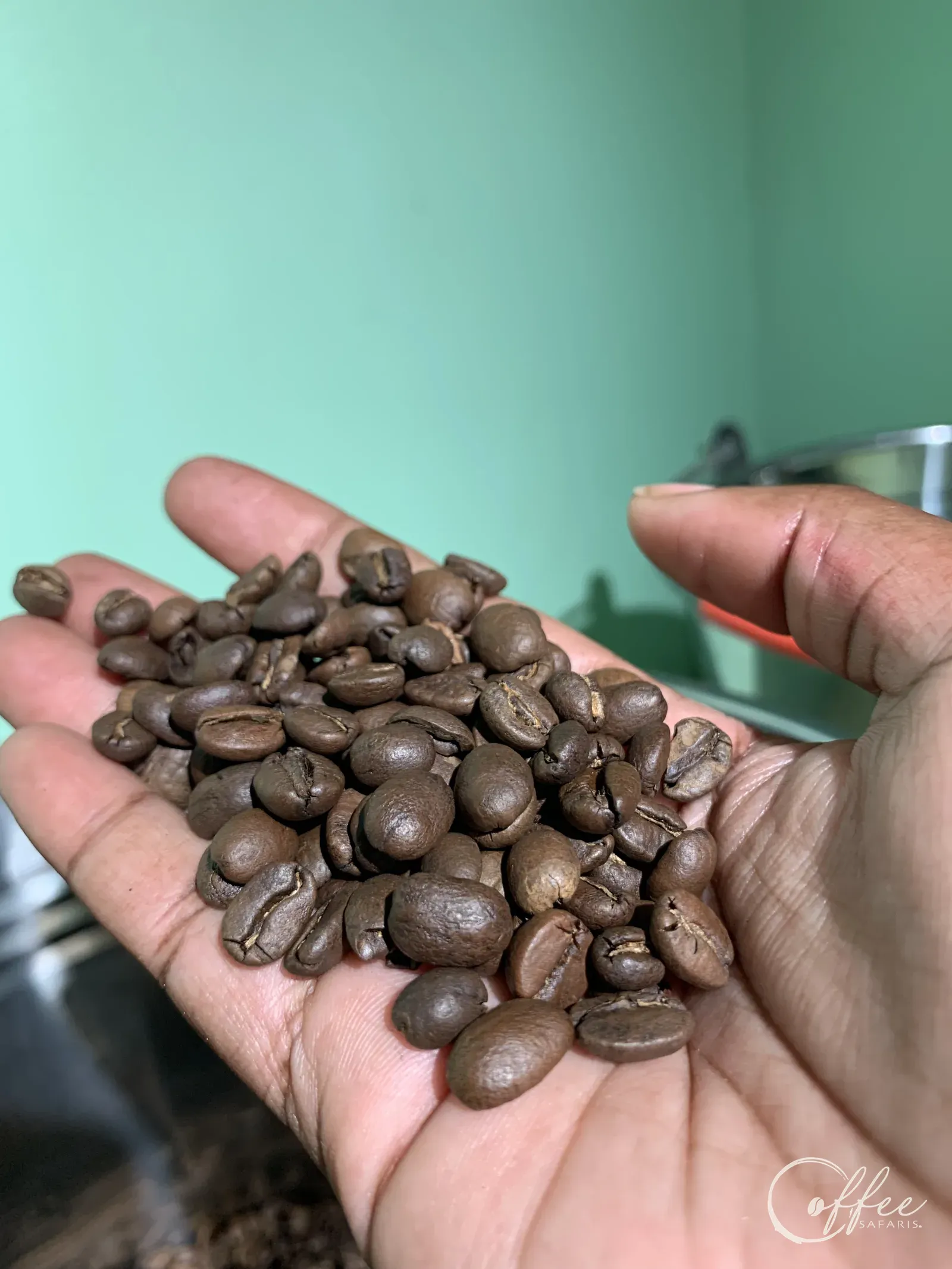
Walk into a specialty café anywhere from Kampala to Copenhagen right now and you'll notice the menu arguing with itself. Half the chalkboard is shouting about single origins and farm names. The other half is quietly, confidently, back to blends.
For most of the last decade, single origin was the story everyone wanted to tell. Traceability became the whole point: a bag of beans with one farm, one harvest, one flavour fingerprint you could hold up and say, "this is exactly where it came from." Blends, by comparison, felt almost old-fashioned: the house-recipe backbone of every café's daily espresso, built for consistency rather than conversation.
That's shifting. As global coffee prices have climbed sharply over the past two years, roasters everywhere are leaning on blending again, partly to manage cost, and partly because a well-built blend still does something no single lot can: it delivers the same cup, every single time, whatever the season throws at the harvest. Blends are even creeping back into competitive brewing, where baristas once treated single origin as the only serious choice.
Uganda was never really choosing sides
Here's the part that makes this trend personal for us. Most coffee-growing countries specialise in one variety and import the other half of a blend from somewhere else entirely. Uganda doesn't have to. We're the ancestral home of robusta (indigenous varieties like Nganda and Erecta still grow wild in the forests around Lake Victoria) and today we grow more of it than any other country in Africa. At the same time, in the cooler highlands of Mount Elgon and the Rwenzoris, we grow arabica good enough to be turning heads in specialty markets in Italy and Germany.
Two harvests a year, two varieties in the same country, often within a few hours' drive of each other. A blend that would take a roaster in Europe three separate shipping containers and three separate relationships to build, Uganda has been quietly growing side by side all along.
"The focus has shifted from utility to expression." That's how one European green-coffee trader recently described Ugandan robusta: no longer just the cheap, reliable filler, but a bean roasters are choosing on purpose.
Lower acidity, higher body, a natural sweetness under the right roast. Ugandan robusta brings something a straight arabica shot can't: thick, stable crema and a texture that holds up in milk. Blended with a brighter, high-altitude arabica from the west, you get a cup with structure and lift. It's not a compromise. It's the point.
Quick facts
- Uganda is the largest robusta producer in Africa, and one of the very few countries growing serious volumes of both robusta and arabica.
- Robusta makes up roughly 80% of national production; arabica, grown in the highlands, is the smaller but fast-improving share.
- Two rainy seasons mean two harvests a year, a steadier, more predictable supply than most single-crop origins.
- Rising global coffee prices in 2024–2026 pushed many international roasters back toward blending for consistency and cost control.
Taste it before you decide
We're not here to tell you blends beat single origin, or the other way round: the honest answer is that neither is "better," only different tools for different mornings. But we will say this: most people who tell us they're "a single-origin person" have never actually tasted a proper Ugandan blend, brewed properly, next to the raw ingredients that went into it. That's exactly the kind of side-by-side tasting we build into a Coffee Safaris visit: robusta from the valley, arabica from the highlands, and the blend that brings them together, cupped in the same sitting so you can taste the difference for yourself.
Come taste where your opinion actually lands.